
Sandwich Panels
Composite panels of two galvanised steel skins around an insulating core, specified by what actually matters to you: energy savings or fire resistance.
Polyurethane (PUR) and polyisocyanurate (PIR) give the lowest thermal conductivity, reaching 0.022 W/m·K, which suits cold stores and residential annexes where energy savings can exceed 70%. Rockwool instead delivers non-combustible A1 fire classification up to 4 hours and better acoustic insulation, which is what industrial plants and public facilities under civil defence requirements need. The difference between a sound installation and a failed one is in the details: EPDM-washered fasteners, high-grade silicone at the joints, and correct roof slopes that stop ponding and thermal bridging.
- Thicknesses
- 50 / 75 / 100 / 150 mm
- Conductivity
- Down to 0.022 W/m·K for PIR
- Fire resistance
- Up to 4 hours — A1 class for Rockwool
- Sheet gauge
- 0.5 – 0.7 mm pre-painted galvanised
- Applications
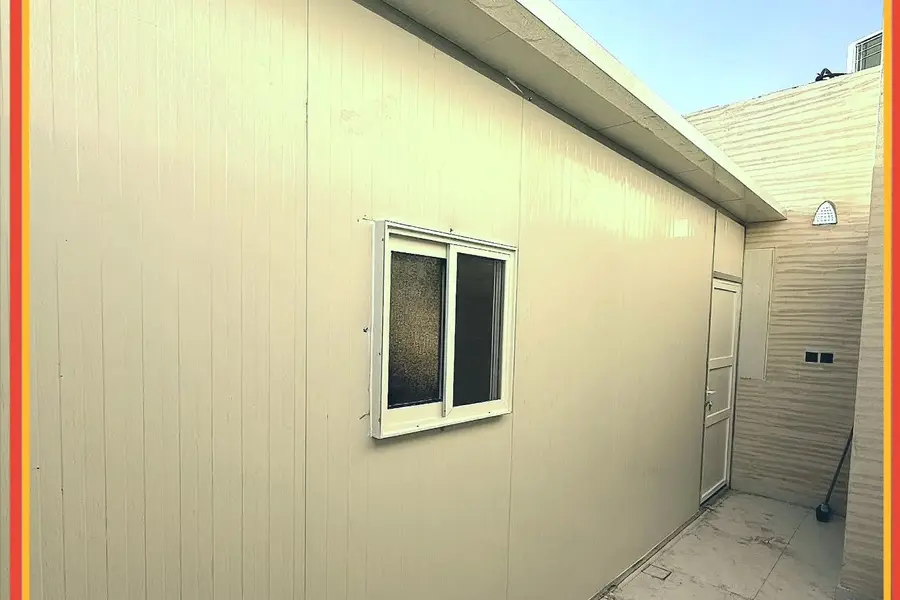
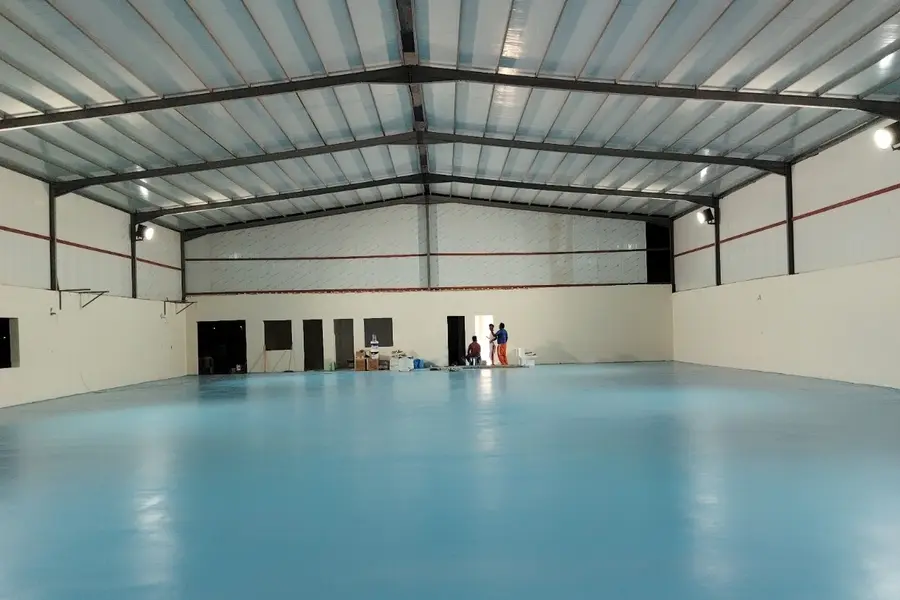
- Cold rooms, plants, annexes, roofs and walls
Execution method
Start with a free site visit
We review the site and drawings and give you a clear preliminary estimate of quantities and duration.
PIR or Rockwool — which is better?
It comes down to one requirement. If fire resistance governs, Rockwool answers it with non-combustible A1 classification up to four hours. If energy saving governs, PUR and PIR give the lowest conductivity, down to 0.022 W/m·K.
What thickness does a cold store need?
Cold stores typically need 100 to 150 mm depending on target temperature and the differential with outside. Thickness follows from the thermal load calculation; unjustified extra thickness is cost without return.
What causes sandwich panel roof leaks?
Five recurring causes: insufficient slope causing ponding, screws without EPDM washers, incorrect panel overlap, joints not sealed with UV-stable silicone, and undersized rainwater drainage. All are installation faults, not material defects.
Can panels be installed on an existing frame?
Yes, provided purlin alignment and the frame capacity for the new loads are verified. Misaligned purlins produce visible panel waviness that cannot be corrected after installation.